
Building a Passivhaus
Passivhaus is a standard for ultra-low energy buildings and attracting a lot of interest in the UK. There are companies who build these houses, but Michael and Clare decided to undertake the project themselves and this is the story of what they did and what they discovered.
Michael and Clare decided to build their passivhaus in a small village and designed it so that it would provide a stunning view across open fields down to the village church. This interview took place as the house was approaching completion, with all the essential work in place and only the internal features, decoration and furnishings to be addressed. It was one of the coldest days of the year, yet the house itself was perfectly warm without the need for heating.
Clare and Michael’s decision to take on this project was based on a concern for the environment and an appreciation of the contribution a passivhaus can make to this. The planning, design and building process gave rise to a number of challenges and, in some cases, compromises, but the house is living up to its promise, proving plenty of fresh air, natural warmth and an impressive natural drying capacity.
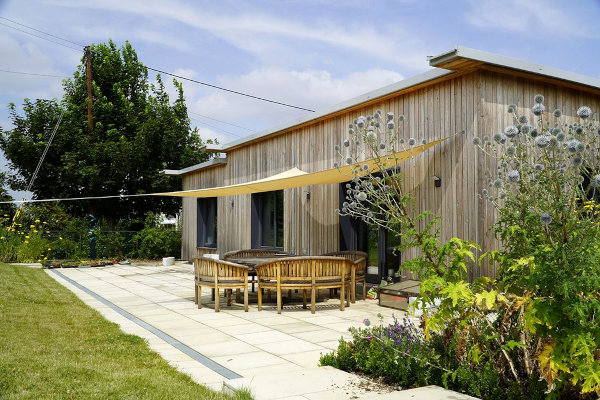 Perhaps the most disappointing aspect of the process was the response of the local planning authority, which rejected their original proposal on the basis of the house’s orientation, a decision that anyone visiting would find puzzling given that it is located on a road where the houses are all different and are set well back, often behind tall hedges. The reorientation meant that solar panels would have been less effective and that instead of “sitting lightly on the earth” as originally planned, the house rested on a concrete lower level, which was less environmentally friendly.
When Michael and Clare finished describing their experiences in building and living in their passivhaus, they gave me a tour and along the way made some interesting observations that are not included in the interview itself. An important feature of a passivhaus is its heat exchange system and they had interesting things to say about its benefits.
The system itself is an impressive piece of technology and they were clearly impressed with its performance: “The stale air is replaced with fresh air but the heat energy is retained and the system automatically adjusts for outside temperature… A passivhaus does need some heating. In theory this could be done with the ventilated system but it’s easier to have a separate heating system. … We installed just four radiators for the whole house… but they never get hot.”
Clare and Michael had some reservations about the effectiveness of the system in an environment such as the bathroom, such as how it would deal with steam, and they were initially sceptical when the installers insisted that a heated towel rail would not be necessary, but there doubts were quickly dispelled: “I asked the guys [who installed the system] what about if you have a shower and the room gets full of steam… and they said that’s not a problem… and I didn’t really believe it but the reality is they’re right … Everything dries so quickly… you hang the washing out there in the morning and by the next morning it’s bone dry… because the moisture in the air is constantly being extracted … Even by the evening the towels are dry … A big positive of a passivhaus is that everything dries so quickly.”
You can hear Michael and Clare talking about their experiences in building a passivhaus via the following link [LINK]. It includes a more detailed summary.
You can also find out more about Passivhaus from the Passivhaus Trust website .