
We’ve been asked what happens to the soft plastics we recycle at supermarkets. Are they really recycled or do they just go to incineration?
Supermarkets are attempting to reduce their packaging and improve their recycling by government legislation. This legislation has several strands: companies have recycling obligations, are charged a fee for plastic packaging that doesn’t include 30% recycled materials, and are being forced to pay for the costs of household recycling. See here for more details.
Some are doing better than others. When the Everyday Plastic campaign put trackers in soft plastic collections from Sainsbury’s and Tesco, they found that 70% was being burned. However, most of this was from Sainsbury’s, while most Tesco packages were being recycled.
Tesco claim to be able to recycle 80% of the waste returned, with the remaining 20% being incinerated. This claim was actually verified by the Everyday Plastic campaign, which showed Tesco
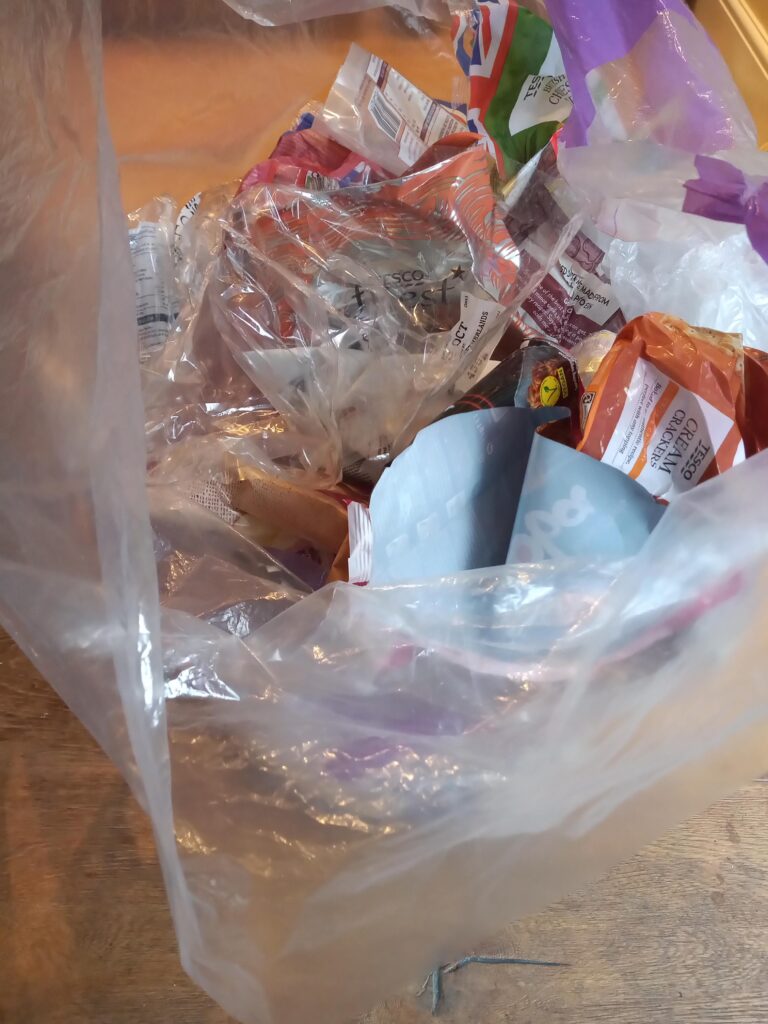
recycling 83% of the soft plastics they were able to track. However, Tesco has yet to manage to recycle its bags in the UK: much goes via a sorting centre in Poland to recycling plants in Turkey (which do, however, claim a 90% recycling rate).
Encouragingly, Tesco say they are superintending the entire recycling chain to minimise the impacts and find the best use for it. Aldi are doing the same. Waitrose say their plastic bags are recycled in Glasgow. Morrisons recycle at least some of their soft plastic waste in a plastic bag recycling plant they co-own in Fife, Scotland.
We haven’t been able to find information about other supermarket chains.
This is probably overall a positive story, showing systems moving in the right direction, albeit unevenly, and with some difficulties on the way. This article provides some further information on other supermarket chains, and some of the applications supermarkets are finding for the plastics can be found here.